Usesful Daily Tips to Stay Healthy


Go Nuts!!

If You are Nuts About Health, Try the Top 6 Healthiest Nuts

Yes they are high in fat, but it’s a good form of fat that when eaten in small quantities, these highly nutritious members of the World’s Healthiest Foods deliver not only delicious flavor, but also nutritional benefits that can help protect you against cardiovascular disease.

The King Nut

The King Nut

Walnuts - a great source of the healthy omega-3 essential fatty acids, which have been found to protect the heart, promote better cognitive function, and provide anti-inflammatory benefits for asthma, rheumatoid arthritis, eczema and psoriasis.

Walnuts also contain the antioxidant compound ellagic acid, which is known to fight cancer and support the immune system. But that’s not all–in a study in the August 2003 issue of Phytochemistry, researchers identified 16 polyphenols in walnuts, including three new tannins, with antioxidant activity so powerful they described it as “remarkable.”

Walnuts are incredibly healthy for the heart. A study in the April 2004 issue of Circulation found that when walnuts were substituted for about one-third of the calories supplied by olives and other monounsaturated fats in the Mediterranean diet:

  • Total cholesterol and LDL (bad) cholesterol were reduced
  • The elasticity of the arteries increased by 64 percent
  • Levels of vascular cell adhesion molecules, which play a major role in the development of atherosclerosis (hardening of the arteries), were reduced


heart healthy

heart healthy

Almonds - Just a quarter cup of almonds contains nearly 25 percent of your needed daily value of the important nutrient magnesium, plus is rich in potassium, manganese, copper, the antioxidants vitamin E and selenium, and calcium. In fact, a quarter cup of almonds has almost as much calcium as a quarter cup of milk.

They’re also great for the colon. An animal study on the effects of almonds on colon cancer found that animals (which were exposed to a colon-cancer-causing agent) given whole almonds had fewer signs of colon cancer than animals given almond oil or no almonds. Researchers suspect the benefit may be due to almonds’ high fiber content.

Plus, almonds are one of the best nuts for lowering cholesterol because 70 percent of the fat they contain is the healthy monounsaturated variety, which has been shown to help clear arteries.

 the nut you cant buy in a shell

the nut you can't buy in a shell

Cashews - are lower in fat than most nuts, and 65 percent of this fat is unsaturated fatty acids. Of this, 90 percent is oleic acid, the heart-healthy fat found in olive oil.

Plus, cashews are rich in copper, magnesium, zinc, iron and biotin.

The largest cashews are found in the Amazon rain forest and are prized as the finest and most unusual cashews. They are hard to get and you can’t get them in the shell.

Organic Cashews

Organic Cashews

Why? It turns out that the cashew shell is toxic. However, that raised the question of what a cashew looks like in its shell. Again, we had no idea. When we found out, we knew more people should see it. Weird looking, isn’t it?
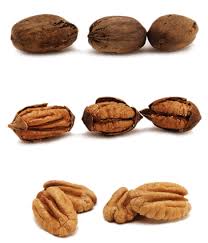

pecans taste great!

pecans taste great!

Pecans - are an excellent source of over 19 vitamins and minerals including vitamins E and A, folic acid, calcium, magnesium, copper, phosphorus, potassium, manganese, several B vitamins and zinc.

Pecans can significantly help lower blood cholesterol when consumed as part of a heart-healthy diet.”

In fact, a study from New Mexico State University found that eating 3/4 cup of pecans a day may significantly lower LDL (bad) cholesterol and help to clear the arteries.
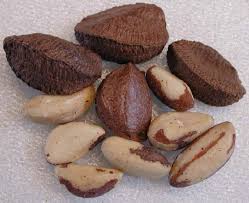
a nut in 2 shells

a nut in 2 shells

Brazil Nuts - These nuts are extremely nutrient-rich and contain protein, copper, niacin, magnesium, fiber, vitamin E and selenium. Selenium is a powerful antioxidant that works to neutralize dangerous free radicals. A study at the University of Illinois even found that the high amounts of selenium in Brazil nuts may help prevent breast cancer.
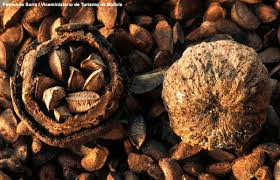
this is how they really grow

this is how they really grow

This nut is also very unique and weird, it does not grown on the tree in these little brown shells. As a matter of fact it grows on trees in a bigger shell that is full of the little brown shell on brazil nuts.
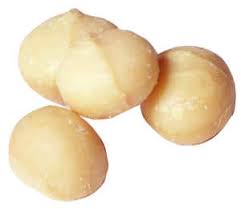

the golden nut

the golden nut

Macadamia Nuts - These nuts are high in protein, fiber, healthy monounsaturated fats, potassium and magnesium. A study done at Hawaii University found that people who had added macadamia nuts to their diets for just one month had total cholesterol levels of 191, compared to 201 for those eating the typical American diet. The largest change was found in the LDL (bad) cholesterol.

A Little Goes a Long Way

The key with nuts is simply not to overeat them. They are highly concentrated in both their calories and their nutrients, so you only need a small handful at a time. Eating a variety of nuts appears to be the best way to get all the different benefits each nut has to offer.

A handful of almonds, sunflower seeds or walnuts, eaten as a healthy snack or used as a flavorful addition to a tossed green salad, will not make you fat.

The fat nuts and seeds contain is mostly polyunsaturated, although they also contain a little monounsaturated, and a very small amount of saturated fat.

The proper balance between these types of fats is important, and many people do not get enough of certain types, especially one type of polyunsaturated fat called omega-3.

Here is are a few videos about cooking nuts!!

Youtube video

cooking nuts & honey

RawNirvana.TV

Walnut Raisin Cookie recipe

Guest Author: http://www.edrugstore.md - a safe pharmacy to learn about consumer medical topics. Edrugstore.md has a comprehensive podcast section that includes breaking medical news by Dr. Daniel Williams, MD.


Where will you like to Spend You Holiday

10 Tips To Healthy Eating

10 Tips To Healthy Eating

Experts agree the key to healthy eating is the time-tested advice of balance, variety and moderation. In short, that means eating a wide variety of foods without getting too many calories or too much of any one nutrient. These 10 tips can help you follow that advice while still enjoying the foods you eat.

See Reference Guide for: Vitamins MineralsAmino Acids Herbs Special Nutrients Anti-Oxidants
Dietary Fibers Nutritional Greens Digestive Nutrients also see Nutritional Glossary INDEX

  1. Eat a variety of nutrient-rich foods. You need more than 40 different nutrients for good health, and no single food supplies them all. Your daily food selection should include bread and other whole-grain products; fruits; vegetables; dairy products; and meat, poultry, fish and other protein foods. How much you should eat depends on your calorie needs. Use the Food Guide Pyramid and the Nutrition Facts panel on food labels as handy references.
  2. Enjoy plenty of whole grains, fruits and vegetables. Surveys show most Americans don't eat enough of these foods. Do you eat 6-11 servings from the bread, rice, cereal and pasta group, 3 of which should be whole grains? Do you eat 2-4 servings of fruit and 3-5 servings of vegetables? If you don't enjoy some of these at first, give them another chance. Look through cookbooks for tasty ways to prepare unfamiliar foods.
  3. Maintain a healthy weight. The weight that's right for you depends on many factors including your sex, height, age and heredity. Excess body fat increases your chances for high blood pressure, heart disease, stroke, diabetes, some types of cancer and other illnesses. But being too thin can increase your risk for osteoporosis, menstrual irregularities and other health problems. If you're constantly losing and regaining weight, a registered dietitian can help you develop sensible eating habits for successful weight management. Regular exercise is also important to maintaining a healthy weight.
  4. Eat moderate portions. If you keep portion sizes reasonable, it's easier to eat the foods you want and stay healthy. Did you know the recommended serving of cooked meat is 3 ounces, similar in size to a deck of playing cards? A medium piece of fruit is 1 serving and a cup of pasta equals 2 servings. A pint of ice cream contains 4 servings. Refer to the Food Guide Pyramid for information on recommended serving sizes.
  5. Eat regular meals. Skipping meals can lead to out-of-control hunger, often resulting in overeating. When you're very hungry, it's also tempting to forget about good nutrition. Snacking between meals can help curb hunger, but don't eat so much that your snack becomes an entire meal.
  6. Reduce, don't eliminate certain foods. Most people eat for pleasure as well as nutrition. If your favorite foods are high in fat, salt or sugar, the key is moderating how much of these foods you eat and how often you eat them.
    Identify major sources of these ingredients in your diet and make changes, if necessary. Adults who eat high-fat meats or whole-milk dairy products at every meal are probably eating too much fat. Use the Nutrition Facts panel on the food label to help balance your choices.
    Choosing skim or low-fat dairy products and lean cuts of meat such as flank steak and beef round can reduce fat intake significantly.
    If you love fried chicken, however, you don't have to give it up. Just eat it less often. When dining out, share it with a friend, ask for a take-home bag or a smaller portion.
  7. Balance your food choices over time. Not every food has to be "perfect." When eating a food high in fat, salt or sugar, select other foods that are low in these ingredients. If you miss out on any food group one day, make up for it the next. Your food choices over several days should fit together into a healthy pattern.
  8. Know your diet pitfalls. To improve your eating habits, you first have to know what's wrong with them. Write down everything you eat for three days. Then check your list according to the rest of these tips. Do you add a lot of butter, creamy sauces or salad dressings? Rather than eliminating these foods, just cut back your portions. Are you getting enough fruits and vegetables? If not, you may be missing out on vital nutrients.
  9. Make changes gradually. Just as there are no "superfoods" or easy answers to a healthy diet, don't expect to totally revamp your eating habits overnight. Changing too much, too fast can get in the way of success. Begin to remedy excesses or deficiencies with modest changes that can add up to positive, lifelong eating habits. For instance, if you don't like the taste of skim milk, try low-fat. Eventually you may find you like skim, too.
  10. Remember, foods are not good or bad. Select foods based on your total eating patterns, not whether any individual food is "good" or "bad." Don't feel guilty if you love foods such as apple pie, potato chips, candy bars or ice cream. Eat them in moderation, and choose other foods to provide the balance and variety that are vital to good health.

See Reference Guide for: Vitamins Minerals Amino Acids Herbs Special Nutrients Anti-Oxidants
Dietary Fibers Nutritional Greens Digestive Nutrients also see Nutritional Glossary INDEX

Figuring Out Fat

With so much information available about the effects of dietary fat on health, understanding the role fat plays in a well-balanced diet can be pretty confusing. To cut through the confusion, it's important to remember that fat is an essential nutrient that everyone needs to stay healthy.

Fat is a valuable energy source and carries fat-soluble vitamins needed for proper growth and development. It also contributes important taste and textural qualities that are part of enjoying food.

Too much fat, however, can increase the risk of heart disease, obesity and other health problems. When moderating fat intake, it's important to consider these points:

  • Health authorities recommend Americans consume 30 percent or less of their total daily calories from fat, with 10 percent or less of those calories from saturated fat. Remember, the 30 percent refers to your total fat intake over time, not single foods or meals. Use the following chart to guide your fat intake.
  • If you eat this Total fat Total saturated
    number of calories per day fat per day
    per day: (grams) (grams)

    1,600 53 or less 18 or less
    2,000 65 or less 20 or less
    2,200 73 or less 24 or less
    2,500 80 or less 25 or less

  • Use the Nutrition Facts panel on the food label to help determine how much fat is in foods. Remember, it's the total fat intake over time that's important. A food high in fat can be part of a healthy diet as long as it's balanced with other lower-fat food choices.
  • All fats are a combination of saturated, polyunsaturated and monounsaturated fatty acids. Each of these types of fats have different effects on the body, but all contain nine calories per gram.
  • Blood cholesterol levels are influenced by family history, weight, age, smoking, physical activity and eating habits. Studies have shown that diets which are too high in certain saturated fatty acids and dietary cholesterol can raise blood cholesterol.

See Reference Guide for: Vitamins Minerals Amino Acids Herbs Special Nutrients Anti-Oxidants
Dietary Fibers Nutritional Greens Digestive Nutrients also see Nutritional Glossary INDEX

The Food Guide Pyramid

The Food Guide Pyramid is a practical tool to help you make food choices that are consistent with the Dietary Guidelines for Americans. Using the Pyramid enables you to eat a variety of foods daily so that you can get the nutrients you need.

To make the most of the Pyramid, you need to know what counts as a serving.

  • Food Group--Serving Size
  • Bread--1 slice bread, 1\2 bagel or English muffin, 1 ounce ready-to-eat cereal, 1\2 cup cooked cereal, rice or pasta, or 5-6 small crackers
  • Vegetable--1 cup raw, leafy vegetables, 1\2 cup cooked or chopped raw vegetables or 3\4 cup vegetable juice
  • Fruit--1 medium piece of fruit, 1\2 cup mixed fruit or 3\4 cup fruit juice
  • Milk--1 cup milk or yogurt, 11\2 ounces natural cheese or 2 ounces process cheese
  • Meat--2 - 3 ounces cooked lean meat, poultry or fish (about the size of a deck of cards)
  • Other foods which count as 1 ounce meat: 1\2 cup cooked dry beans, 1 egg, 2 tablespoons peanut butter or 1\3 cup nuts

See Reference Guide for: Vitamins MineralsAmino Acids Herbs Special Nutrients Anti-Oxidants
Dietary Fibers Nutritional Greens Digestive Nutrients also see Nutritional Glossary INDEX

If You Want To Know More

A nutrition expert can help you develop a personal action plan for improving your eating habits while keeping the fun in food. A registered dietitian (R.D.) is an authority on food, nutrition and health, and can provide valuable information and advice.

To locate a registered dietitian in your area, ask your physician, or call the consumer nutrition hot line (800/366-1655) of the National Center for Nutrition and Dietetics, the public education center of The American Dietetic Association. Registered dietitians are available to answer your food and nutrition questions Monday through Friday from 9 a.m. to 4 p.m. central time. In addition, you can listen to nutrition messages in English and Spanish, Monday through Friday from 8 a.m. to 8 p.m. central time.

International Food Information Council Foundation
1100 Connecticut Avenue, N.W.
Suite 430
Washington, DC 20036

Reprinted from the International Food Information Council Foundation, 1994

Cosponsored by:
The American Dietetic Association

Also see:
Phytochemicals: Nutrients Of The Future
Antioxidants: An Antidote to Aging?
Better Eating for Better Aging
Nutrition Is Key To Successful Aging: Kidd
Latest Concepts in Nutrition
Life Long Weight Management for Health and Happiness
New Perspectives on Diet and Cancer
Upbeat on Fiber for Longer Life and Better Health
A Refresher On Water for Long Life and Health
Daily Recommendations: Vitamins, Minerals & Trace Elements
Suggested Readings and Guide References

See Reference Guide for: Vitamins MineralsAmino Acids Herbs Special Nutrients Anti-Oxidants
Dietary Fibers Nutritional Greens Digestive Nutrients also see Nutritional Glossary INDEX

Source